

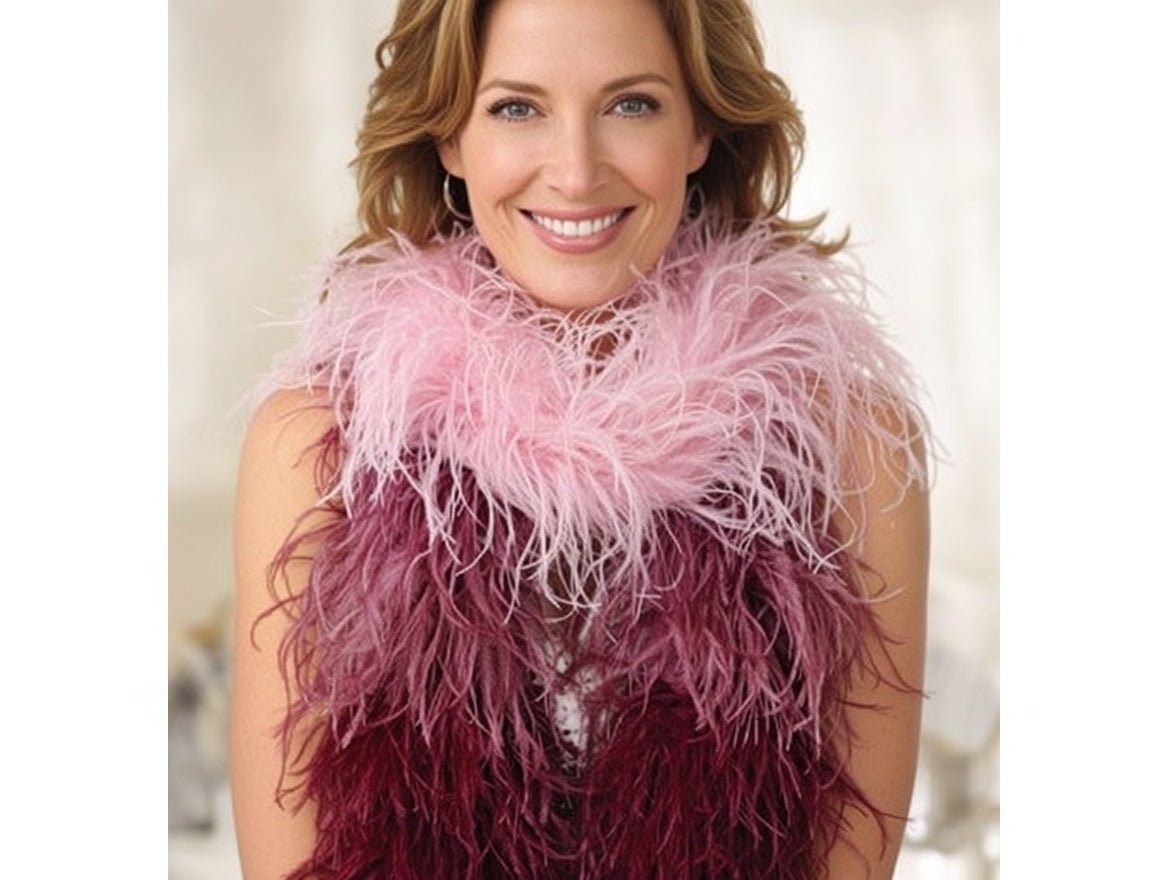
- by Pepper Developments
Feather Boas in Music Videos: Iconic Moments from the MTV Era to TikTok
- by Pepper Developments
From shimmering stages to grainy late-night television, music videos have always relied on visual shorthand to communicate identity, mood, and cultural intent. Among the most enduring of these symbols is the feather boa. Soft, dramatic, and instantly eye-catching, feather boas sit at the intersection of fashion, performance, and spectacle. They move when the artist moves, catch the light, and transform even minimal choreography into something theatrical.
During the height of the MTV era, accessories became storytelling tools as important as lighting or camera angles. A single costume choice could define an artist’s persona for a generation. As the music industry evolved from long-form broadcast videos to short-form, algorithm-driven clips on TikTok, those same principles remained intact. What changed was the format, not the power of visual symbolism.
This article explores how feather boas and feathered accessories have shaped music video aesthetics from MTV’s golden age to today’s social-first platforms. It examines why feathers work so well on camera, how they’ve been used across decades and genres, and how modern creators can apply these lessons to stand out visually. Whether you’re a stylist, content creator, or pop-culture enthusiast, understanding the role of feather boas reveals how fashion continues to drive visual storytelling in music.
Long before music videos existed, feather boas were already embedded in performance culture. Originating in the late nineteenth and early twentieth centuries, boas were popularized by stage performers, burlesque dancers, and silent-film stars who needed accessories that exaggerated movement and silhouette. Feathers offered softness combined with drama, allowing performers to command attention even from the back row.
By the mid-twentieth century, feather boas had become shorthand for glamour, indulgence, and playful rebellion. They appeared in cabaret, jazz clubs, and theatrical revues, spaces where performance and fashion were inseparable. This theatrical heritage made feather boas a natural fit for music videos once the medium emerged.
What makes feathers uniquely effective on camera is their kinetic quality. Unlike rigid accessories, they respond to motion, airflow, and lighting. In visual media, this creates:
Depth and texture within the frame
Emphasis on body movement and rhythm
A sense of luxury or fantasy without dialogue
For music videos, where storytelling often relies on visuals rather than narrative exposition, feather boas communicate emotion instantly. They can suggest confidence, sensuality, irony, or nostalgia in a single shot.
Actionable insight: When planning visual content, choose accessories with movement. Feathers amplify motion and translate energy even in static or slow-motion shots.
When MTV launched in the early 1980s, it fundamentally changed how audiences consumed music. Songs were no longer just heard; they were watched. This shift elevated costume design from a supporting role to a central narrative device.
Music videos became short films, and accessories like feather boas helped artists communicate identity quickly. In a three- to four-minute runtime, visuals needed to be instantly legible. Feathers, already loaded with cultural meaning, provided that clarity.
During this era, feathered looks aligned with several MTV-era priorities:
Creating instantly recognizable imagery
Differentiating artists within a crowded visual space
Reinforcing themes of excess, glamour, or theatricality
MTV also amplified repetition. Videos aired multiple times per day, embedding visual cues into collective memory. A dramatic outfit wasn’t seen once; it was seen hundreds of times. This repetition turned costume elements into cultural symbols.
Practical takeaway: Repetition builds recognition. When an accessory appears consistently across visuals, it becomes part of an artist’s brand language.
In early pop and rock music videos, feathers often appeared as part of broader costume designs rather than standalone accessories. Artists experimented with feathered jackets, shoulder pieces, and stage-inspired styling that echoed glam rock and theatrical pop traditions.
These early videos used feathers to soften aggressive aesthetics or to exaggerate flamboyance, depending on genre. Rock artists used feather accents to push against conventional masculinity, while pop performers leaned into feathers to enhance fantasy and performance.
What’s notable is that feathers rarely felt accidental. Even when minimal, they signaled intentionality. A feathered detail suggested that the video was not merely documenting a performance but staging one.
Feather boas, in particular, began to emerge as symbols of self-awareness. They communicated that the artist understood the performative nature of pop stardom and was willing to play with it.
Creative tip: Feather accessories work best when aligned with concept. Decide whether they represent glamour, irony, nostalgia, or power, and style accordingly.
The 1990s pushed visual maximalism to new heights. Music videos embraced bold colors, exaggerated silhouettes, and unapologetic extravagance. Feather boas fit perfectly into this aesthetic landscape.
This decade blurred the line between fashion editorial and music performance. Accessories were no longer subtle enhancements; they were focal points. Feathers emphasized confidence and spectacle, reinforcing the era’s embrace of excess.
The rise of award-show culture and behind-the-scenes specials further cemented the importance of visual branding. Artists didn’t just wear feathers on screen; they wore them as part of a broader pop persona that extended beyond the video itself.
Feathered looks during this period communicated:
Confidence and dominance
Glamour without restraint
A willingness to challenge minimalism
Actionable insight: In visually crowded environments, bold accessories cut through noise. Feathers provide scale and texture that stand out even on low-resolution screens.
As music videos entered the 2000s, choreography took center stage. High-energy dance routines required costumes that moved dynamically without restricting performers. Feather boas and feathered trims offered both visual drama and flexibility.
Pop videos of this era leaned heavily on synchronized movement, close-ups, and rapid editing. Feathers enhanced all three. They accentuated spins, added flair to pauses, and created visual continuity across cuts.
The era also marked the rise of global pop aesthetics, where visual cues needed to translate across cultures. Feathers, as non-verbal symbols of glamour and performance, crossed those boundaries effortlessly.
Practical advice: For dance-driven content, test accessories in motion. Feathers should enhance movement, not distract from choreography.
A modern example of feather boas used with intention can be seen in Mad Love by Mabel. The video blends retro inspiration with contemporary styling, using feathered accessories to heighten visual impact without overwhelming the frame.
Here, feathers function as both fashion and narrative device. They reference classic glamour while aligning with modern pop aesthetics. The result feels playful yet polished, bridging past and present.
What makes this case particularly relevant is its timing. Released in a digital-first era, the video demonstrates that feather boas remain effective even as viewing habits shift toward mobile and short-form consumption.
Key lesson: Feathers are timeless when styled with restraint. Pair them with modern silhouettes to avoid visual overload.
The rise of TikTok transformed how music visuals are created and consumed. Clips are shorter, audiences scroll faster, and visuals must capture attention within seconds. Feather boas thrive in this environment.
On TikTok, feathers are often used in transformation videos, dance trends, and performance-inspired clips. Their movement reads clearly even on small screens, making them ideal for mobile viewing.
Unlike the MTV era, where visuals were controlled by labels and directors, TikTok democratized visual storytelling. Creators now use feather boas to evoke pop-star energy without large budgets.
Effective uses include:
Quick outfit reveals using feather movement
Dance accents that emphasize rhythm
Retro-inspired aesthetics that stand out algorithmically
Actionable tip: For short-form video, prioritize accessories that communicate instantly. Feathers create immediate visual interest within the first second.
Feathers endure because they operate on multiple symbolic levels simultaneously. Visually, they suggest softness and motion. Culturally, they reference glamour, fantasy, and performance. Psychologically, they draw the eye through movement.
In music videos, feathers enhance lighting effects. They catch highlights, diffuse shadows, and create depth within the frame. Cinematographers often favor textures that respond to light, and feathers perform exceptionally well in this regard.
Symbolically, feather boas can represent:
Confidence and self-expression
Playful defiance of norms
Nostalgia for classic performance eras
Creative insight: Use feathers to reinforce emotion. Match feather color and density to the mood of the song for cohesive storytelling.
While feather boas appear across genres, they thrive most in styles that prioritize performance and visual flair. Pop remains the most fertile ground, but feathers also appear in disco revivals, glam-influenced rock, and theatrical R&B visuals.
Genres that emphasize storytelling through fashion benefit most from feather accessories. They provide visual cues that support sound and mood without requiring narrative explanation.
For creators experimenting across genres, feathers can be adapted by:
Scaling size for subtlety or drama
Choosing muted tones for moody tracks
Using bold colors for high-energy performances
Practical takeaway: Genre dictates scale. Match feather intensity to the musical style for visual harmony.
As music videos continue to evolve alongside technology, feather boas remain surprisingly adaptable. Emerging formats such as vertical video, immersive visuals, and augmented effects still benefit from tactile, physical accessories.
Future uses may blend physical feathers with digital enhancements, amplifying movement or color in post-production. Yet the core appeal remains unchanged: feathers humanize performance by adding organic motion.
Brands and creators sourcing feather accessories increasingly focus on craftsmanship and ethical considerations. Specialized suppliers like https://fancyfeather.com/ have contributed to maintaining quality and variety, ensuring feathers remain relevant in professional styling contexts.
Forward-looking advice: Combine traditional accessories with modern editing. Feathers paired with contemporary visuals create timeless yet current aesthetics.
From the early days of MTV to the algorithm-driven world of TikTok, feather boas have proven remarkably resilient as visual storytelling tools. Their ability to communicate glamour, movement, and emotion transcends format and era. While platforms and viewing habits change, the fundamentals of visual impact remain constant.
Music videos succeed when they create memorable imagery, and feathers consistently deliver that memorability. They link past and present, stage and screen, performance and persona. Whether used sparingly or extravagantly, feather boas continue to shape how audiences experience music visually.
For creators, the lesson is clear: accessories matter. Thoughtfully chosen elements like feather boas can elevate visuals, reinforce identity, and ensure that a moment lingers long after the music fades.
Share:
Creating Feather Centerpieces for Themed Parties: From Great Gatsby to Masquerade Balls
The Science of Feather Structure: Why Ostrich Feathers Float, Flex, and Flow