Introduction
Feather accessories—whether feather boas draped over the shoulders or feather fans unfurled in a dramatic sweep—have long been celebrated in fashion and performance. Traditionally associated with femininity and theatrical glamour, these pieces are undergoing a powerful renaissance as men embrace them not only onstage, but in everyday fashion and personal expression. This blog examines how feather accessories challenge gender norms in fashion and performance, delving into their rich history, cultural impact, and practical styling advice. By exploring both heritage and innovation, we’ll illustrate why feathers are more than decorative adornments—they are symbols of creativity, identity, and liberation.
The History of Feathers in Fashion and Adornment
Feathers have adorned humans for millennia, signaling status, identity, and artistry across civilizations. In ancient Egypt, ostrich feathers denoted authority and were used in ceremonial fans and dress. During the Renaissance, vibrant feather plumes embellished doublets and cloaks, conveying power and prestige in courtly settings. By the nineteenth century, feathers—particularly ostrich and marabou plumes—had become key elements in Western fashion trims and accessories, especially in hats and collars, epitomizing opulence and luxury.
These early incorporations show that feathers were not always gendered; men and women alike used plumage as a signifier of aristocracy. Only with the rigid gendered fashion codes of the twentieth century did feathers become predominantly associated with female glamour. Understanding this evolution sets the stage for appreciating today’s gender‑fluid fashion movements.
Feather Accessories and Western Gender Norms
In the twentieth century, Western fashion increasingly categorized accessories as “masculine” or “feminine,” a binary shaped by media, marketing, and cultural expectation. Feather boas and fans, with their soft textures and dramatic movement, became deeply associated with traditional femininity, appearing in Hollywood films, vintage photography, and stage costumes that evoked glamour and allure.
This gendering was not inherent to the materials but a product of broader sociocultural narratives. Feathers came to symbolize sensuality, softness, and theatricality—traits historically coded as feminine. These perceptions influenced how men’s fashion avoided flamboyant elements, with feathers relegated to costumes or niche performance contexts. Yet as society increasingly questions rigid gender binaries, these norms are being rethought and dismantled.
Feather Boas: From Spectacle to Subversion
The feather boa is perhaps the most iconic feather accessory in Western fashion. Emerging in the early 1800s as a luxurious ornament, the boa offered both visual drama and textural richness, quickly gaining popularity among fashionable elites.
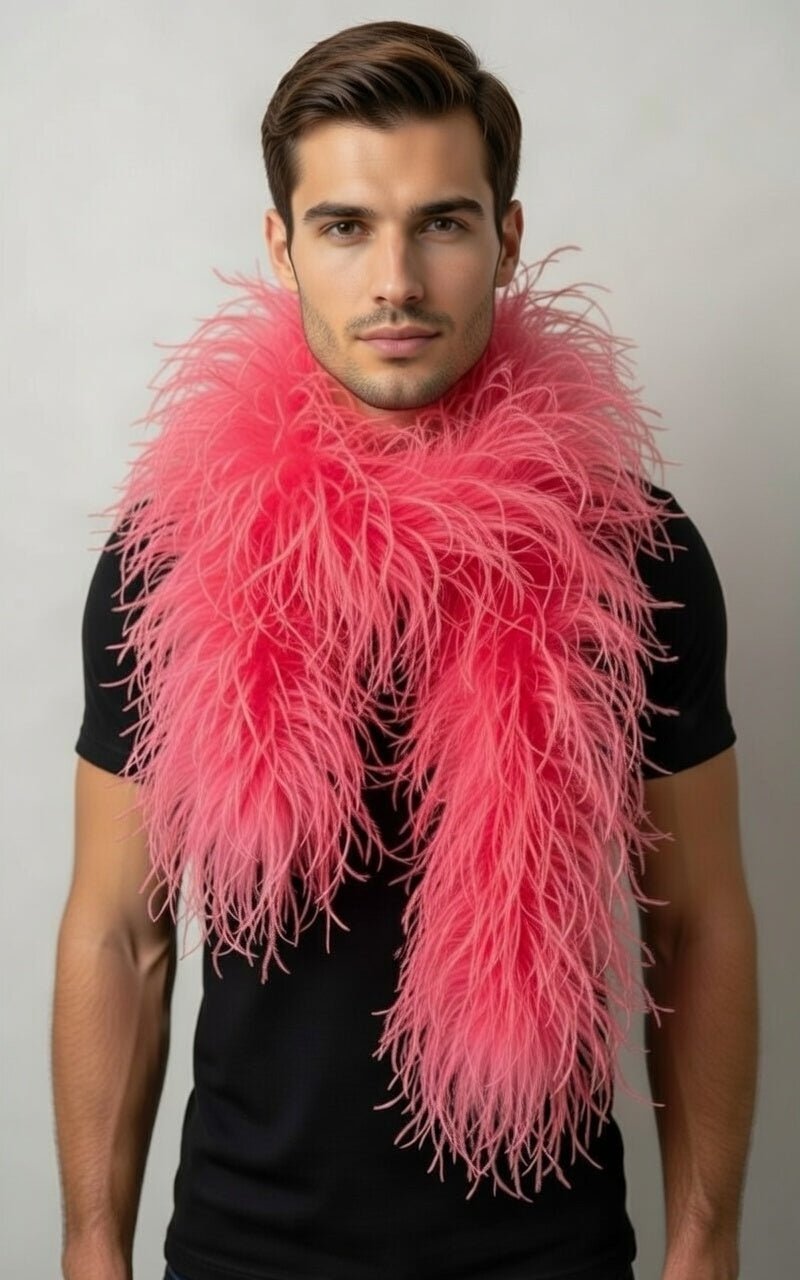
By the Victorian era, feather boas became symbols of excess and allure, especially in performance spaces, chic social circles, and cultural revolutions. Their cascading plumes created movement and presence—qualities that naturally translated into performance art and stagecraft. Yet, in the hands of modern wearers, the feather boa has evolved from a marker of spectacle into a tool of subversion. Wearing one as a man in contemporary settings defies traditional fashion boundaries, challenging the stereotype that such accessories are solely the domain of women.
Feather boas now serve as visual shorthand for confidence, theatricality, and expressive freedom. Whether integrated into avant‑garde runway looks or adopted by everyday street style, they defy simplistic gender classifications and invite us to reconsider what masculine fashion can encompass.
Icons Who Wore Feathers and Defied Norms
Fashion transformation rarely happens in a vacuum—it often traces back to icons who wore feathers with confidence and purpose. In the twentieth century, performers and artists used feather accessories to shape identity and challenge norms. Liberace, for example, incorporated peacock‑feather boas into his stage persona, redefining masculinity with flamboyant elegance and defying conservative expectations for men on stage.
In rock and glam, figures like David Bowie pushed boundaries further. His bold use of feathers and androgynous silhouettes in the glam rock era blurred gender lines, suggesting that fashion could be expressive rather than restrictive. Contemporary influencers continue this legacy; artists and performers on global platforms wear feather pieces confidently, demonstrating that such accessories are powerful markers of individuality and artistic identity.
These examples highlight that feathers—once symbols of purely feminine glamour—can become emblems of self‑expression for anyone. The legacy of these icons reminds us that fashion is a medium of personal storytelling, not strict adherence to outdated norms.
Feather Fans and Movement in Performance Art
Feather fans have a storied place in performance history, particularly in burlesque and theatrical dance. In the 1930s, performers used large ostrich feather fans as dramatic props, creating choreography that teased and mesmerized. These accessories became essential tools for expressing emotion, character, and narrative through movement.
In drag and performance art, feather fans have become symbolic gestures—tools that amplify movement and presence, capturing audiences’ gaze with luxurious motion. The deliberate sweep of a fan can punctuate a performance, create visual rhythm, and emphasize storytelling in dance and theatrical routines. Men in performance, whether in classical burlesque or contemporary drag, use fans to reinvent personas and embody moments of cinematic theatre.
From classic fan dances to today’s reinterpretations, feather fans underscore how accessories can extend the body’s expressive language, making every gesture part of the artistic narrative.
Drag Culture and Queer Expression
Feather accessories feature prominently in drag culture, where they serve as amplified symbols of glamour, femininity, and theatricality. Drag artists have embraced feather boas and fans as more than props; they are tools for crafting exaggerated personas that both celebrate and critique gender norms.
In this context, feathers are woven into routines that play with identity, humor, and transformation. The vibrant colors and dramatic forms align with the ethos of drag: to push boundaries, embrace the theatrical, and revel in self‑expression. Feather accessories are especially impactful during performances and runway walks, adding layers of visual texture and emotional resonance.
For many queer artists, wearing feathers is a deliberate act—one that reclaims a historically gendered accessory and reassigns its meaning to reflect personal identity and community pride. In doing so, drag culture not only challenges the conventions of fashion but also invites broader conversations about authenticity and creative freedom.
How Men Are Wearing Feathers in Everyday Fashion
Today, feather accessories are moving beyond performance stages into everyday fashion. On runways and at public events, men are adopting feather boas, feather‑trimmed jackets, and feather accents as part of bold personal style. This trend reflects a growing embrace of gender‑fluid fashion, where individuals use clothing and accessories to express identity without constraint.
Practical styling tips help make feathers wearable: consider pairing a feather boa with structured outerwear to balance dramatic texture with tailored silhouettes. Select muted or unified feather colors to integrate with neutral palettes, grounding the look while preserving impact. Feather fans, when carried casually, function as statement pieces at fashion events or photoshoots.
The key to wearing feathers confidently lies in intention. Whether integrating a feather accessory into street style or elevating evening wear, wearers should prioritize coordination, proportion, and context to avoid costume‑like effect. With thoughtful styling, feather accessories can transform any outfit from conventional to conversation‑worthy.
Styling Feather Accessories
Incorporating feather accessories into menswear requires both creativity and balance. A feather boa, for example, pairs well with minimalist outfits—think a sleek black turtleneck or a simple blazer. The contrast between bold feathers and simple lines creates visual interest without overwhelming the wearer.
When wearing feather fans outside performance, choose times and venues where expressive fashion is celebrated—art openings, fashion weeks, creative gatherings. Integrating feathers with textured fabrics like wool or suede adds depth, while coordinating color tones prevents the accessory from feeling out of place.
For more daring ensembles, combine feathers with tailored trousers or structured jackets to juxtapose classic elements with avant‑garde flair. The goal is to make feather accessories feel intentional, aligning them with the wearer’s personal narrative and style philosophy.
Cultural Impact and Social Conversations
Feather accessories have become focal points in modern dialogues about gender and self‑expression. As men increasingly wear feathers, social reactions range from admiration to critique, reflecting broader cultural shifts around masculinity and fashion. These accessories challenge assumptions about what men should or should not wear.
Importantly, the use of feather accessories also intersects with ethical fashion discussions. Historically, feather sourcing led to significant ecological impacts, prompting modern consumers to consider sustainability and animal welfare in their choices. This has driven demand for cruelty‑free and synthetic alternatives that preserve aesthetic quality while respecting environmental concerns.
As conversations about inclusivity and responsibility continue to evolve, feather accessories remain at the intersection of cultural expression and conscientious consumption, demonstrating how fashion reflects wider societal values.
The Future of Feather Accessories and Masculinity
Looking ahead, feather accessories are poised to remain powerful tools for self‑expression. As younger generations embrace fluid fashion identities, the distinctions between “men’s” and “women’s” accessories will continue to blur. Feathers—once confined to costumes or theatrical stages—are becoming mainstream symbols of individuality.
Fashion forecasts suggest that bold accents and unconventional materials will shape future trends, with feathers offering dynamic texture and movement. Sustainability will likely be central to these developments, prompting designers to innovate with ethically sourced materials and imaginative designs.
Ultimately, the future of feather accessories in menswear looks bright. As cultural norms evolve, feathers will not merely adorn outfits—they will signify creativity, courage, and the ongoing redefinition of masculine fashion.
Conclusion
Feather accessories for men represent more than a fleeting style trend; they embody a cultural shift in fashion and self‑expression. From their rich historical roots to their modern resurgence in performance and everyday wear, feathers challenge outdated norms and invite us to rethink identity through fashion. Whether worn on stage, at social events, or as part of personal style, feather accessories convey confidence, artistry, and a fearless embrace of individuality. As we continue to question and redefine gendered fashion codes, feathers remind us that style is not about conformity—it’s about expression, creativity, and the stories we choose to tell through what we wear.

Share:
Feather Accessory Photography Tips: How to Capture Texture, Movement and Color Like a Pro
Creating Feather Centerpieces for Themed Parties: From Great Gatsby to Masquerade Balls